Water is one of those things most people don’t think much about until something goes wrong. A glass may look perfectly clear, yet the water inside can still contain sediment, chlorine, minerals, or other unwanted substances picked up along the way. That’s why choosing the right water filtration approach isn’t simply about buying a filter and hoping for the best. It’s about understanding what’s actually in your water and deciding how much protection your household needs.
For some homes, a basic filter is enough. Others may need a more complete system that treats water throughout the property. The right solution depends on your water source, plumbing, household size, and the specific contaminants you’re trying to reduce. It sounds technical, but the basic idea is pretty simple: test first, choose wisely, and maintain the system properly.
Why Water Quality Can Change at Home
Municipal water generally goes through extensive treatment before it reaches your property, but that doesn’t mean its journey ends there. Water can travel through miles of pipes before reaching your tap. Older plumbing, construction work, storage tanks, or changes in the local water supply can affect what comes out of the faucet.
Related readingCleaner Water at Home: Choosing the Right Filtration and Softening Solution
Private wells bring another set of considerations. Groundwater can naturally contain iron, manganese, sulfur, sediment, or hard-water minerals. The water might taste fine while still causing problems for fixtures, appliances, and plumbing.
Then there are everyday concerns. Maybe your water has a noticeable chlorine taste. Perhaps there’s cloudy water after heavy rain, or you’ve noticed a strange smell from one faucet. These signs don’t necessarily mean the water is unsafe, but they’re good reasons to investigate rather than ignore the issue.
Start With Testing, Not Guesswork
One of the easiest mistakes homeowners make is choosing a filtration system based on a neighbor’s recommendation. What works beautifully in one house may be completely unnecessary in another.
Related readingHow UV Disinfection Light Can Help Protect Your Home’s Water
A proper water test can reveal hardness, pH, iron, manganese, chlorine, sediment, and other characteristics that influence treatment decisions. In some situations, additional testing may be appropriate for contaminants such as lead, nitrates, or certain industrial chemicals.
Testing also helps prevent over-treatment. You don’t necessarily need the most complicated system available. If your main issue is visible particles, for example, an advanced multi-stage setup might be more than you need. On the other hand, a simple carbon filter won’t solve every problem either.
Think of water testing as getting a diagnosis before starting a repair. It saves money, avoids unnecessary equipment, and gives you a clearer path forward.
Related readingGood Water Quietly Protects the Home You’ve Worked Hard For
Sediment Is More Than an Appearance Problem
Sediment is often one of the first water-quality issues people notice. Fine sand, dirt, rust particles, and other suspended material can make water look cloudy or leave deposits around faucets. More importantly, those particles can gradually affect plumbing components and filtration equipment.
A properly selected filter can provide sediment protection by capturing particles before they move deeper into the home’s plumbing system. The type and size of the filter matter, though. A cartridge designed for light sediment may struggle with heavier loads, while an overly restrictive filter can reduce water pressure.
Homes using well water may require particular attention here. Groundwater conditions can change over time, especially after storms or periods of heavy pumping. In those cases, sediment filtration may need to be paired with other treatment technologies instead of working alone.
Whole-Home Filtration Versus Drinking Water Filters
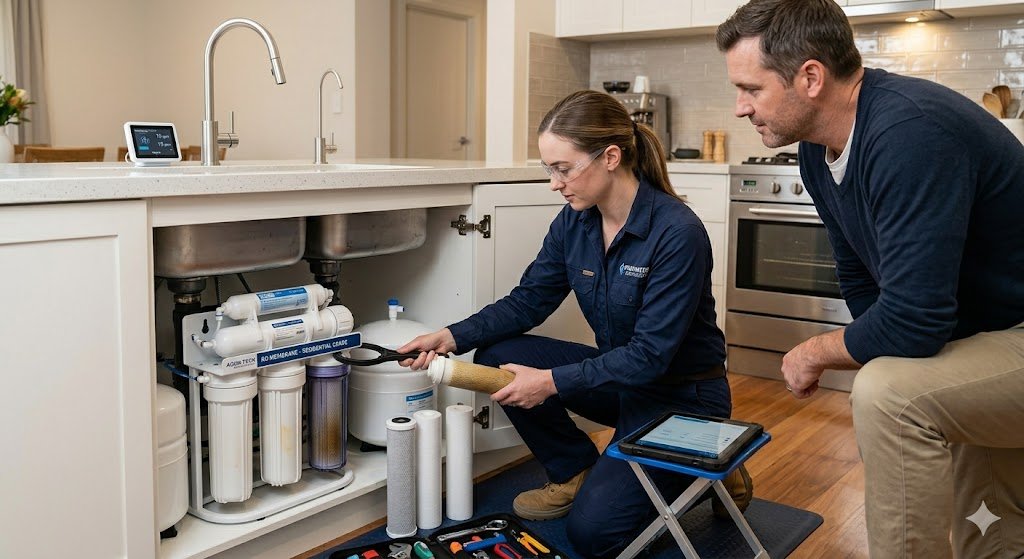
Not every water source needs to be treated in exactly the same way. A drinking-water filter installed beneath the kitchen sink can be a practical choice if your main concern is the quality and taste of water used for drinking and cooking.
Related readingUnderstanding Carbon and Mineral Media in Modern Water Filtration
Whole-home filtration takes a broader approach. It treats water as it enters the property, meaning showers, bathroom sinks, laundry machines, and other fixtures can benefit from the treatment. This can be particularly useful when the concern involves chlorine, sediment, unpleasant odors, or other issues affecting general household water.
There are also situations where combining whole-home and drinking water options makes sense. A whole-home system can address general water-quality concerns, while a dedicated point-of-use system provides additional treatment for drinking water. It’s not necessarily about choosing one or the other. Sometimes the best answer is a combination.
Don’t Forget About Hard Water
Hard water is common in many areas and is caused primarily by dissolved calcium and magnesium. It isn’t usually a matter of water looking dirty. Instead, the effects tend to show up slowly.
You might notice white spots on glassware, soap that doesn’t lather well, dry-feeling skin, or scale collecting around faucets and showerheads. Over time, mineral buildup can also affect water heaters, dishwashers, washing machines, and other appliances.
Related readingFinding the Right Water Treatment System for a Healthier and More Comfortable Home
A water softener is different from a typical drinking-water filter. It is designed specifically to reduce hardness minerals, usually through an ion-exchange process. If hard water is the main concern, installing a standard carbon filter alone probably won’t solve the problem.
Understanding that distinction can save homeowners from spending money on equipment that isn’t designed for the issue they actually have.
Installation Matters More Than People Think
Even a high-quality filtration system can perform poorly if it’s installed incorrectly. Flow direction, pipe sizing, pressure, bypass valves, drainage, shutoff access, and filter placement all matter.
That’s where professional installation can make a meaningful difference. An experienced installer can evaluate the existing plumbing, determine where equipment should go, and make sure the system operates within the manufacturer’s specifications.
Professional help is especially useful for whole-house systems, complex filtration setups, water softeners, and equipment that requires drainage or electrical connections. There’s also the practical side of it. A clean installation should be accessible for future maintenance rather than tucked away somewhere nobody can reach.
Maintenance Keeps the System Working
Buying a filtration system isn’t the finish line. Filters eventually become saturated, media can lose effectiveness, and mechanical components may need inspection.
Replacement schedules vary considerably. Some cartridges may need changing every few months, while certain systems can operate much longer between service intervals. Usage, incoming water quality, and system capacity all play a role.
It helps to keep a simple maintenance record. Write down when cartridges were replaced, when the system was serviced, and whether you noticed changes in taste, pressure, color, or odor. Those little notes can be surprisingly useful later.
Choosing a Solution That Fits Your Home
There’s no universal “best” water filtration system. The ideal setup is the one that matches your actual water conditions and household needs.
Start with testing. Identify the problem. Consider whether you need treatment throughout the home or only at specific taps. Then look at operating costs, filter replacement requirements, available space, water pressure, and long-term maintenance.
Most importantly, don’t let complicated product names distract you from the basics. Good water treatment isn’t about owning the fanciest equipment. It’s about getting the right treatment for the right problem and keeping it working properly.
Clean, reliable water should feel ordinary — something you can pour into a glass without giving it a second thought. With sensible testing, appropriate filtration, and regular care, that’s exactly what a good water-treatment setup can help provide.