Water is one of those things most homeowners barely think about until something goes wrong. Maybe the shower leaves a chalky film on the glass. Perhaps your clothes feel stiff after washing, or there’s an odd taste in your morning coffee. Sometimes the signs are subtle, but over time, poor water quality can become a frustrating part of everyday life.
The good news is that improving household water doesn’t always require a complicated setup. The right filtration and treatment equipment can make a noticeable difference, especially when it’s selected according to the actual problems in your water. A thoughtful approach starts with understanding what’s coming through your pipes, then choosing equipment designed to address those specific concerns.
Start by Understanding Your Water
Before buying any treatment equipment, it helps to know what you’re dealing with. Water quality can vary dramatically from one neighborhood to another, and even two homes on the same street may have different concerns depending on their plumbing, water source, and local conditions.
Related readingWhat Your Water Test Results Can Reveal About the Health of Your Home
Municipal water may contain disinfectants such as chlorine, while private wells can have sediment, minerals, iron, sulfur odors, or other naturally occurring substances. Hard water is another common issue. It typically contains elevated amounts of calcium and magnesium, which aren’t necessarily a health concern but can create plenty of household headaches.
A basic water test can reveal useful information about hardness, pH, iron, chlorine, and other characteristics. Instead of guessing, homeowners can use those results to make a much more sensible treatment decision.
What a Whole-Home Filter Actually Does
A whole house water filter is designed to treat water as it enters the property, rather than filtering only the water from one faucet. That means treated water can reach showers, bathroom sinks, kitchen taps, washing machines, and other fixtures throughout the house.
Depending on its design and filter media, a whole-home filtration setup may reduce sediment, chlorine, unpleasant tastes and odors, and certain other contaminants. The important word here is “may.” Not every filter removes every contaminant, so homeowners should pay attention to the manufacturer’s certified performance claims.
Related readingCleaner Water Starts With the Right Filtration Approach
One of the biggest advantages is convenience. You don’t have to remember which faucet needs a filter or keep a separate pitcher sitting in the refrigerator. The treatment happens upstream, quietly doing its job while you go about your day.
Don’t Confuse Filtration With Water Softening
Filtration and softening are related, but they solve different problems. This distinction gets overlooked surprisingly often.
Water softeners are primarily designed to address hardness minerals, particularly calcium and magnesium. If you’ve noticed white scale around faucets, cloudy shower doors, reduced soap lather, or deposits inside appliances, hard water could be part of the problem.
Related readingGood Water Quietly Protects the Home You’ve Worked Hard For
Modern water softener systems commonly use ion-exchange technology to reduce hardness as water passes through the treatment media. The result can be softer-feeling water, less mineral scale, and potentially better performance from water heaters and plumbing fixtures.
A softener isn’t automatically the answer to every water-quality complaint, though. It doesn’t replace a drinking-water filter designed for specific contaminants, and it shouldn’t be purchased simply because someone says every home needs one. Testing first is still the smarter move.
Why Whole-Home Treatment Can Be Convenient
There’s something reassuring about turning on a tap and knowing the water has already passed through the appropriate treatment equipment. A properly sized whole house water filter system can provide that kind of behind-the-scenes convenience.
Because the equipment is installed at a central point, treatment isn’t limited to drinking water. Water used for bathing, cleaning, and laundry can also benefit when the system is designed for those purposes.
That said, sizing matters. A system that’s too small may struggle to maintain adequate flow when several fixtures operate simultaneously. A unit that’s unnecessarily large can cost more without providing meaningful benefits. Flow rate, household size, water pressure, and expected water usage should all be considered before installation.
Related readingHow UV Disinfection Light Can Help Protect Your Home’s Water
Think About Your Household, Not Just the Equipment
The “best” water treatment system isn’t necessarily the newest or most expensive one. It’s the one that fits the household.
A family with several bathrooms may have very different needs from a couple living in a smaller home. Someone using private well water could need sediment and iron treatment, while another homeowner may mainly want to reduce chlorine taste from municipal water.
Lifestyle matters, too. If your household uses a lot of water for laundry, bathing, gardening, or cooking, system capacity becomes particularly important.
Related readingFinding the Right Water Treatment System for a Healthier and More Comfortable Home
And don’t forget maintenance. Filters eventually need replacement, while softeners may require salt or other routine servicing depending on their design. A system that looks perfect on paper isn’t much use if maintaining it becomes a chore nobody wants to deal with.
Protect Appliances and Plumbing
Water treatment isn’t only about how water tastes in a glass. Your plumbing and appliances interact with that water every single day.
Hard-water scale can accumulate inside water heaters, faucets, showerheads, dishwashers, and other equipment. Over time, deposits may interfere with efficiency and normal operation. Sediment can also create problems when it enters plumbing fixtures or appliances.
Reducing these issues can help keep household equipment working more smoothly. It won’t make every appliance last forever, of course, but reducing unnecessary exposure to troublesome minerals and particles is a sensible form of preventative care.
For homeowners, that’s often where water treatment starts to feel less like an optional upgrade and more like practical home maintenance.
Installation Is Only Half the Job
Even a high-quality treatment unit won’t perform properly if it’s installed incorrectly or poorly matched to the home’s plumbing.
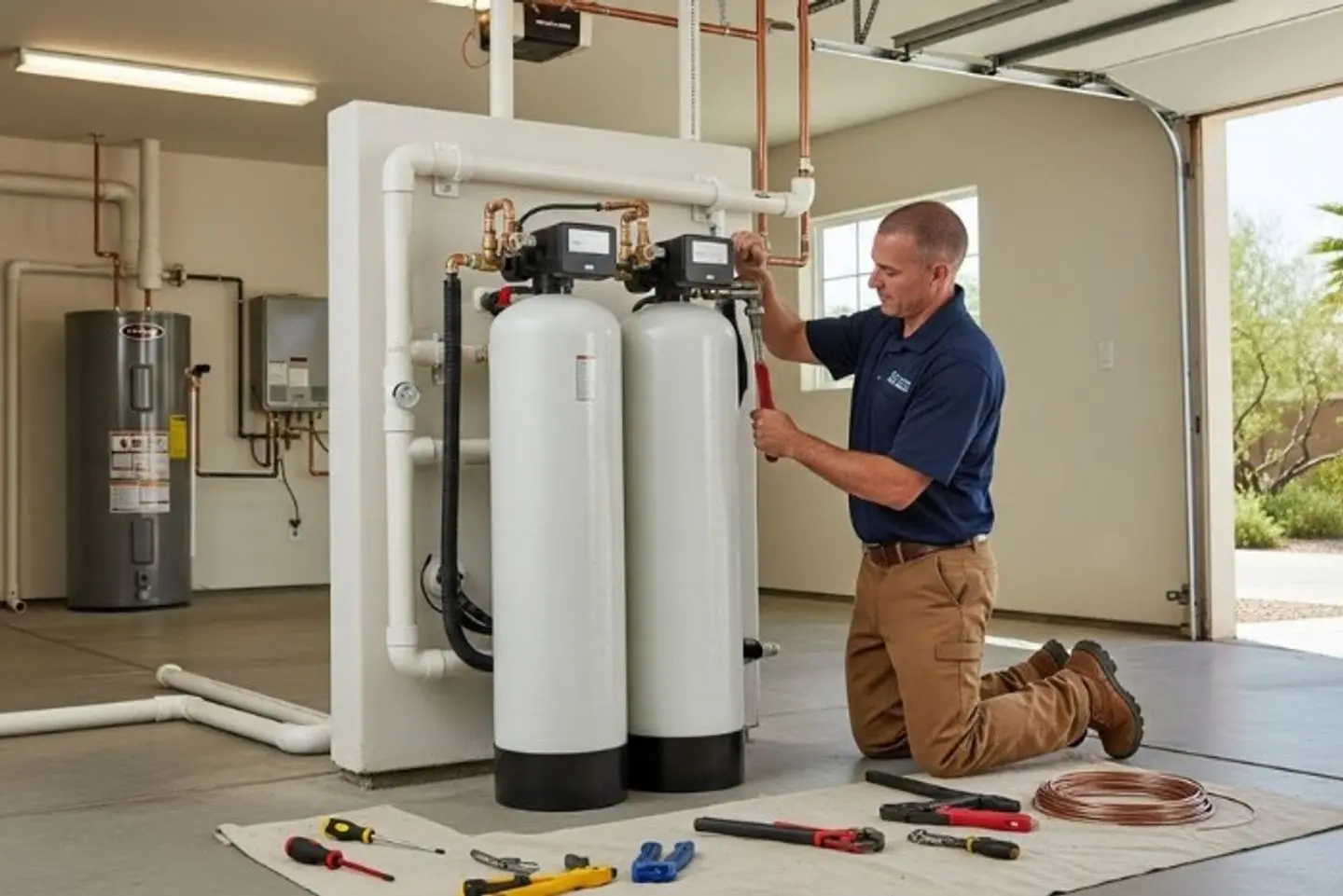
Professional installation can help ensure the system is positioned correctly, connected safely, and sized appropriately for the home’s water demand. It also provides an opportunity to check pressure, plumbing configuration, drainage requirements, and available installation space.
After installation, regular maintenance matters just as much. Filters should be replaced according to their rated capacity or manufacturer’s guidance, and softeners should be checked periodically to make sure they’re regenerating correctly.
A little attention now can prevent an annoying surprise later.
Make the Decision Based on Evidence
There’s no shortage of water-treatment products promising cleaner, healthier, better-tasting water. It can get confusing quickly. One system claims to solve everything, another focuses on a particular contaminant, and someone online insists their setup is the only one worth buying.
Try not to get swept up in that noise.
Start with a reliable water test. Identify the actual issues. Decide whether you need filtration, softening, or a combination of treatment methods. Then compare systems based on performance, capacity, maintenance requirements, installation needs, and long-term cost.
Most importantly, look for transparent information about what a system is designed to remove or reduce. Specific claims are much more useful than vague promises about “pure” or “perfect” water.
A Better Water Setup Starts With the Right Question
Good water treatment isn’t about installing the biggest system you can afford. It’s about solving the problems your household actually has.
Maybe your priority is reducing chlorine taste. Maybe it’s hard-water scale, sediment, or an unpleasant odor. Whatever the concern, testing and careful selection can keep you from spending money on equipment that doesn’t address the issue.
Once you understand your water, the path forward becomes much clearer. And honestly, that’s the part worth remembering: better water at home usually starts not with a product, but with a little information and the right plan.