There’s a moment we’ve all had—stuck in a customer support chat, typing “agent” again and again, hoping to escape the loop of automated replies. For years, bots have been efficient but frustrating, helpful but oddly robotic. And now, something new has entered the scene.
Digital humans—AI avatars that look, speak, and respond like real people—are quietly reshaping how companies handle customer service. Not just text responses anymore, but faces, voices, expressions. It almost feels like you’re talking to someone… until you remember you’re not.
So naturally, the curiosity kicks in. Is this actually better, or just a more polished version of the same old thing?
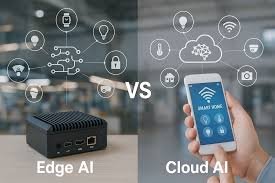
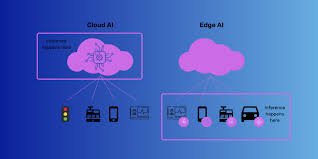
Related readingWhen AI Has to Decide Fast: Why the Edge vs Cloud Debate Feels More Real Than Ever
What Exactly Are Digital Humans?
At a basic level, digital humans are AI-powered avatars designed to interact with users in a more natural, human-like way. They can speak, maintain eye contact, even display subtle facial expressions.
Behind the scenes, they combine natural language processing, voice synthesis, and visual rendering. It’s a mix of technologies working together to create something that feels, at least on the surface, like a real conversation.
And compared to traditional chatbots, it’s a noticeable leap.
The First Impression: Surprisingly Engaging
There’s no denying it—the experience can feel more engaging.
Related readingAI SEO Services in 2026: What’s Actually Changed Since the Hype First Started
Instead of reading blocks of text, you’re watching a “person” respond. There’s a sense of presence, even if it’s artificial. For some users, this makes interactions less tedious, more conversational.
It’s especially useful in scenarios like onboarding, product explanations, or guided support. The visual element adds a layer of clarity that plain text often lacks.
But first impressions aren’t everything.
Where They Actually Shine
Digital humans tend to perform well in structured interactions.
Related readingOwning Your Data: Could Personal Data Vaults Finally Change the Privacy Game?
Think FAQs, step-by-step troubleshooting, or basic service inquiries. In these cases, the combination of visual cues and conversational tone can make the process smoother.
They’re also available 24/7, don’t get tired, and can handle multiple users simultaneously. From a business perspective, that’s a significant advantage.
And for customers, it means quicker responses—no waiting in long queues.
The Question of Effectiveness
Of course, efficiency is only part of the story. The real measure lies in how well these systems actually solve problems.
Which brings up an important question: Digital humans (AI avatars) customer service me kitne effective hain?
The answer, like most things in tech, is… it depends.
When Things Get Complicated
The moment a conversation moves beyond predefined scenarios, cracks can start to show.
Complex issues, emotional situations, or anything requiring nuanced judgment can be challenging for AI avatars. They might respond correctly in a technical sense, but miss the emotional context entirely.
And that’s where users often feel the difference.
A real human can pick up on frustration, adjust their tone, offer reassurance. Digital humans, despite their expressive faces, are still working within programmed boundaries.
The Human Touch Still Matters
Customer service isn’t just about solving problems—it’s about how those problems are handled.
Sometimes, people just want to feel heard. Not processed, not guided through a system, but genuinely understood.
Digital humans can simulate empathy to an extent. They can use the right words, the right tone. But whether that translates into a truly satisfying experience is still up for debate.
There’s a subtle gap between imitation and authenticity.
Cost vs. Experience
From a business standpoint, the appeal is clear.
Digital humans can reduce operational costs, handle large volumes of queries, and maintain consistency in responses. They don’t have bad days, don’t make random errors, and can be scaled easily.
But there’s a trade-off.
If the experience feels too artificial, customers might disengage. And in a competitive market, experience matters just as much as efficiency.
Companies need to balance cost savings with customer satisfaction—and that’s not always straightforward.
A Hybrid Future?
Interestingly, many organizations aren’t choosing between humans and AI—they’re combining both.
Digital humans handle initial interactions, filter basic queries, and then pass more complex issues to human agents. It creates a layered system where each plays to its strengths.
In theory, this works well. In practice, it depends on how seamlessly the transition happens.
Because nothing frustrates a user more than repeating their problem after being transferred.
The Role of Expectations
Another factor that shapes effectiveness is expectation.
If users know they’re interacting with an AI avatar, they’re more forgiving of limitations. But if the system tries too hard to appear human and falls short, it can feel deceptive.
Transparency, in this case, becomes important.
Let people know what they’re interacting with, and they’re more likely to engage with it on the right terms.
Looking Ahead
Digital humans are still evolving. As AI models improve, so will their ability to understand context, emotion, and complexity.
We might see avatars that adapt their responses based on user behavior, or systems that learn from past interactions to provide more personalized support.
It’s an ongoing process. Not perfect yet, but moving steadily forward.
Final Thoughts
Digital humans in customer service sit at an interesting intersection—between technology and human experience.
They offer speed, scalability, and a more engaging interface than traditional bots. But they’re not a complete replacement for human interaction, at least not yet.
If used thoughtfully, they can enhance the support experience. If overused or poorly implemented, they can do the opposite.
In the end, it’s not about whether AI avatars are effective in isolation. It’s about how they’re integrated into the broader customer service ecosystem.
Because sometimes, the best solution isn’t choosing between human and machine—it’s knowing when to use each.